Affiliate Program Terms Checklist: 12 Clauses That Decide Whether You Get Paid
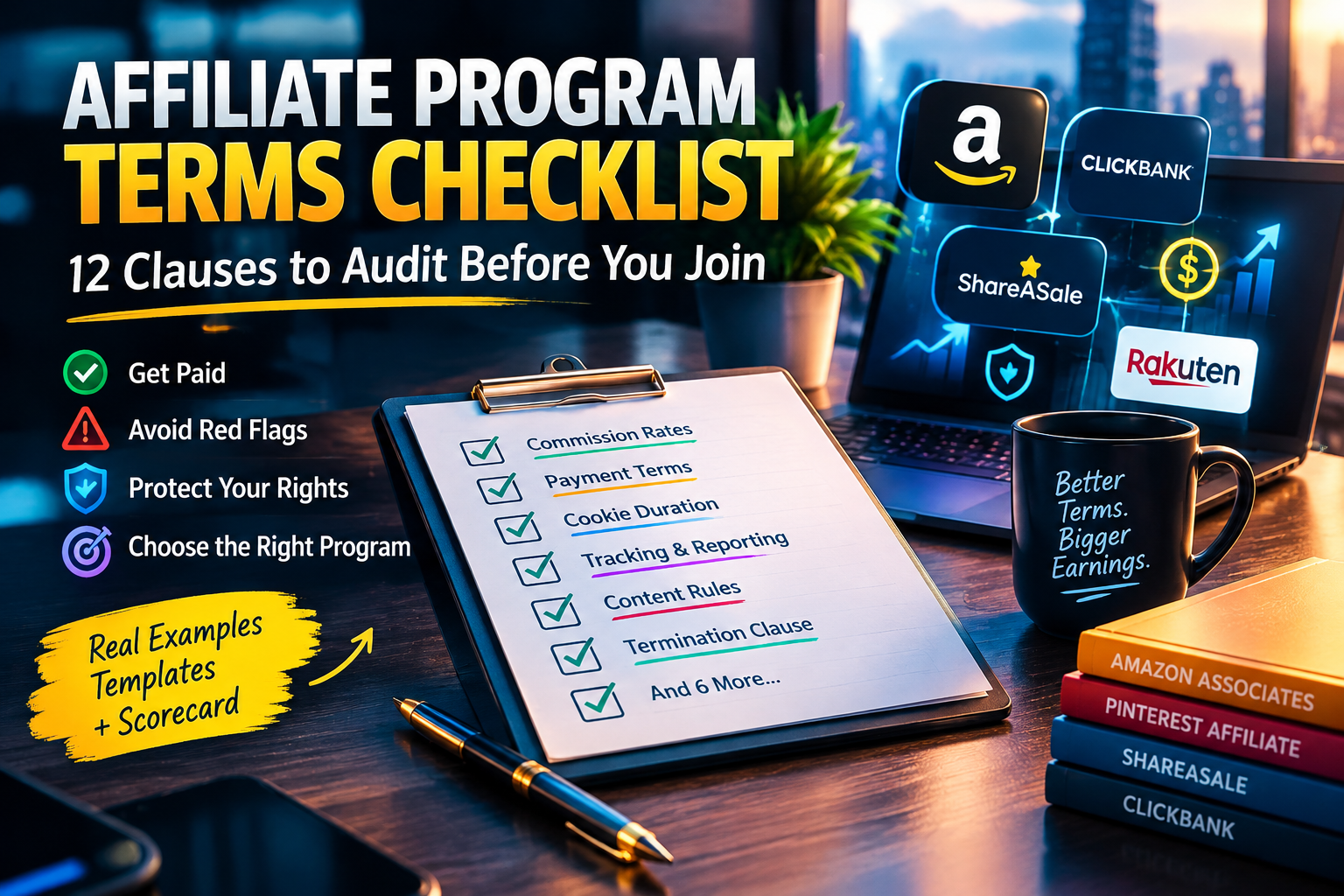
Before you promote an affiliate program, read its terms for 12 clauses: attribution window, what counts as a sale, refund clawbacks, payout threshold, allowed channels, paid-ad rules, disclosure, coupon rules, link rules, content rules, change and termination rights, and payment setup. One clause, such as no commission on ads you buy, can erase your earnings.
In this guide
- Approval is not protection. The terms decide what you actually keep
- Check clawbacks, ad rules and channel limits before you invest in content
- Programs reserve the right to change terms, so re-read them on a schedule
- Never inflate your numbers in an application. A mismatch with your real channel gets you declined
Why should you read the terms before you promote?
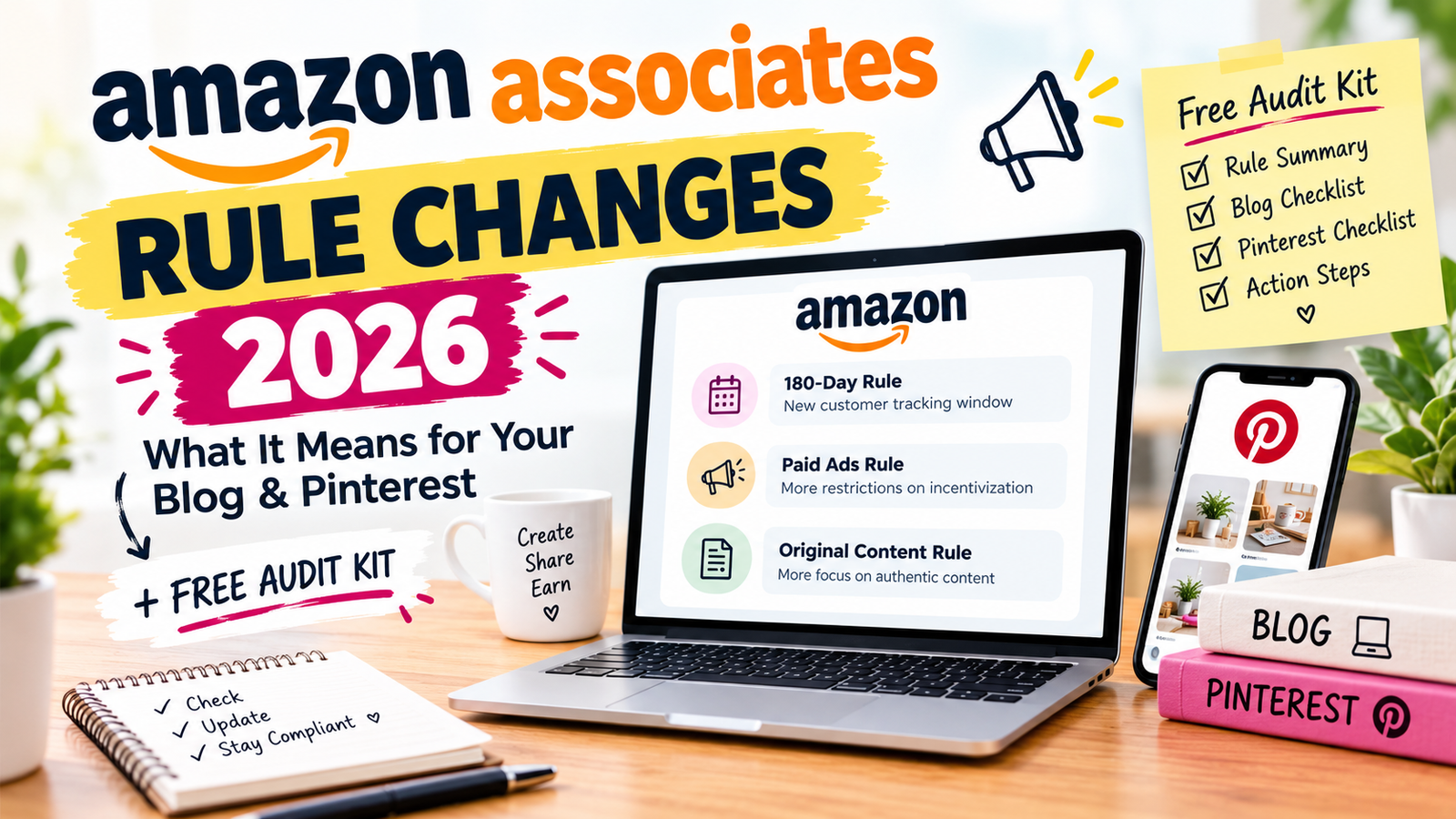
Most affiliates read the commission rate and stop. The terms are where the money is won or lost. Amazon’s April 14, 2026 policy update is the clearest recent example: it disqualifies purchases from customers referred through ads you buy, and it requires extra original content on pages that link to search results or other product lists. A blogger who never read those clauses could build traffic that earns nothing. See our guide to the Amazon Associates 2026 rule changes.
Programs also reserve flexibility. PricePush states that commission rates, attribution rules, payout thresholds and eligible products may change at its discretion. Amazon says it makes some determinations in its sole discretion. Neither is unusual. It means a one-time read isn’t enough.
What is the 12-clause audit?
Work through these in order. Each card shows what to look for and what should make you stop.
1Attribution window
Look for: how long a click earns credit, and whether last click wins.
Red flag: credit lost on a different device or browser, with no stated duration.
2Commission and duration
Look for: rate, and whether it’s one-time or recurring.
Red flag: “up to” rates with no tiers listed.
3What counts as a sale
Look for: qualifying events and exclusions.
Red flag: no commission on pages you’d naturally link, such as docs or demos.
4Refunds and chargebacks
Look for: when commission is final.
Red flag: paid commission clawed back from future payouts with no time limit.
5Payout threshold and schedule
Look for: minimum balance, timing and method.
Red flag: a high threshold you may never reach.
6Allowed channels
Look for: blogs, email, social, video explicitly permitted.
Red flag: your main channel not mentioned, or restricted.
7Paid ads and brand bidding
Look for: a clear yes or no, and any conditions.
Red flag: sales from ads you buy disqualified, or brand keyword bidding banned.
8Disclosure and content rules
Look for: required wording and placement.
Red flag: fabricated testimonials, or restrictions on using the content for AI.
9Coupons and codes
Look for: who may promote codes and how.
Red flag: extensions or deal pages barred from codes you plan to use.
10Link rules
Look for: shorteners, redirects and cloaking limits.
Red flag: a link format that hides the destination.
11Changes and termination
Look for: notice periods and penalties.
Red flag: changes at any time with forfeiture of pending commission.
12Payment setup and tax
Look for: payout platform, currency and tax forms.
Red flag: unclear who pays you or in which currency.
What do four real programs say about these clauses?
The table shows what the primary pages say about some of the 12 clauses. “Not in what I read” means the section I read didn’t cover it, which is itself a prompt to check the full terms.
| Clause | Amazon Associates | Barn2 (Shopify apps) | PricePush | Shopify |
|---|---|---|---|---|
| Attribution | 24-hour session; items added to cart in that session can qualify if ordered within 89 days | Cookie expiry applies; a purchase from a different browser or device earns nothing | 60-day cookie, last-referrer attribution | Not in what I read |
| Recurring | One-time sales | Paid for the lifetime of the customer’s subscription | Not in what I read | Not in what I read |
| Refunds and chargebacks | Not in what I read | No commission on refunds or chargebacks; commission already paid is deducted from a future payout | Not in what I read | Not in what I read |
| Payout | Not in what I read | $50 minimum, rolls over, paid 2 to 7 business days after the minimum is met | $25 minimum, paid through the Lemon Squeezy affiliate platform | Not in what I read |
| Paid ads | Purchases referred through ads you bought are disqualified | Bidding on keywords or social ads is allowed only if you meet listed conditions | No paid-search bidding on its brand terms or variants | Trademark and misspelling bidding prohibited |
| Coupons | Not in what I read | Not in what I read | Not in what I read | Loyalty and browser extensions may not promote promo codes or coupons |
| Links | No cloaking or redirects; shorteners must not obscure that the link goes to Amazon | No commission on links to its demo site or documentation pages | Tracked through the last ?aff= click | Cookie stuffing and hidden tracking prohibited |
| Content | Pages linking to product lists need extra original content; no use of Program Content to train AI | Not in what I read | No fabricated testimonials or disguised paid reviews | Not in what I read |
| Changes and penalties | Some decisions in Amazon’s sole discretion | Not in what I read | Terms and rates may change at its discretion; damages possible for prohibited activity | Commission reduction, forfeiture or removal for violations |
How do you get approved, and what if you’re declined?
Program help pages and affiliate guides repeat the same causes of rejection: your niche doesn’t match the product, your site or channel looks empty, or your application doesn’t match reality. One program’s help page warns that claiming 50,000 subscribers when your linked channel shows 500 gets you rejected. A guide describes a blogger declined with 5 articles and approved for the same programs three months later at 30 posts. That is one anecdote, not a rule, but it shows why waiting and building can work.
Before you apply, check three things: your content is relevant to the product, you have enough published pages to show real work, and your numbers are honest. Then write specific answers, not “social media and blog posts.”
How do you build a program scorecard?
- Open the full terms for each program and the date you read them.
- Fill one row per program in the scorecard: commission, attribution, refund rule, payout, channel and ad rules.
- Count red flags against the 12 clauses. Any red flag on your main channel is an automatic stop.
- Score fit from 1 to 5: audience match, product quality, realistic earning potential and risk.
- Decide: apply, wait, or skip. Record the date for re-checking, such as every quarter.
Also check the related rules for where you publish. For Pinterest, see our guide to Pinterest affiliate disclosure.
FAQ
What should I check in an affiliate program’s terms?
Why was my affiliate application rejected?
Can I reapply after a rejection?
What is an affiliate clawback?
Can I run paid ads for affiliate links?
How long should the attribution window be?
How often should I re-read affiliate terms?
Do I need a lawyer to understand affiliate terms?
Where to start
Pick the three programs you earn most from, and run each through the 12 clauses today. The first clause you can’t find in the terms is the one to ask the program about.
Amazon Associates Program Policies · Barn2 app affiliate terms · PricePush affiliate terms (May 14, 2026) · Shopify affiliate compliance guidelines · SimplyPrint: how to apply for the affiliate program · AffTank: getting approved as a beginner. Terms change; confirm on the official pages. General information, not legal advice.